As MagnaFlow expanded its portfolio of performance automotive brands, its ecommerce ecosystem became increasingly complex, spanning multiple platforms, disconnected user experiences, and highly technical product data requirements.
What once worked at a smaller scale was no longer sustainable.
Managing a growing network of ecommerce properties across multiple brands introduced operational inefficiencies, fragmented customer journeys, and increasing complexity in product data management.
PIVOT partnered with MagnaFlow to re-architect the experience from the ground up, consolidating its ecosystem into a unified, scalable Shopify Plus architecture designed to streamline operations, improve performance, and support long-term growth across acquisitions.
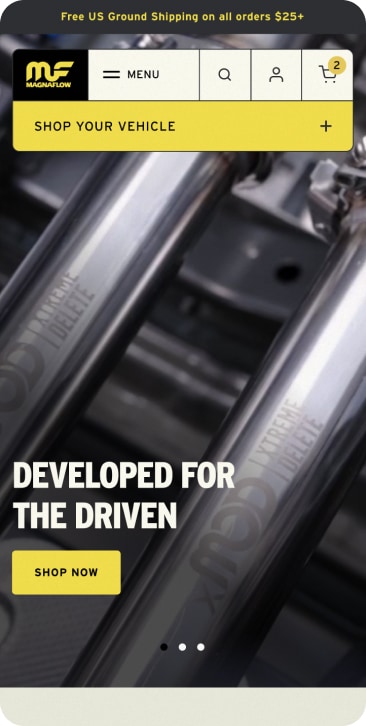
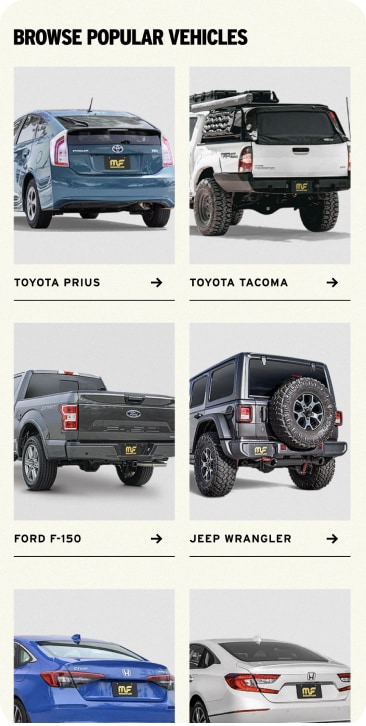
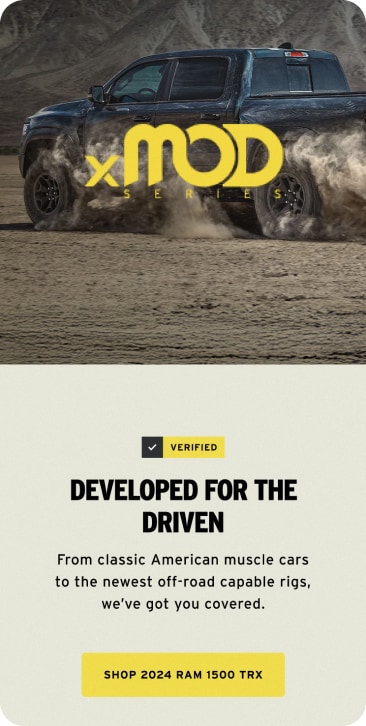
MagnaFlow’s growth introduced significant operational and technical complexity.
TheChallenge( Magnaflow )
Each brand operated with its own systems, creating inefficiencies across data management, customer experience, and scalability. Fragmented platforms led to inconsistent experiences, a headless architecture limited SEO and marketing flexibility, and disconnected user journeys meant separate carts and checkout flows across brands. Complex automotive data standards and precise Year-Make-Model fitment requirements added further technical complexity to an already fragmented foundation.
As ecommerce ecosystems expand through acquisition, complexity compounds unless the architecture is designed to unify it. PIVOT approached MagnaFlow's transformation as a platform consolidation challenge — building a centralized, modular ecosystem that standardizes infrastructure across brands while preserving flexibility for future growth.
Unified Shopify Plus Multi-Brand Architecture
TheSolution( magnaflow )
PIVOT consolidated MagnaFlow's fragmented ecosystem into a single Shopify Plus architecture, centralizing infrastructure across all brands within a standardized, scalable framework. A reusable Shopify 2.0 theme system was developed to support both current and future brand storefronts, with modular components that enable consistent UX while allowing brand-level customization — significantly reducing development time for future launches. A modular CMS gives internal teams control over content and campaigns without relying on development resources, while a transition away from limiting headless implementations to a Shopify-native architecture improved page speed, SEO structure, and flexibility for marketing teams.
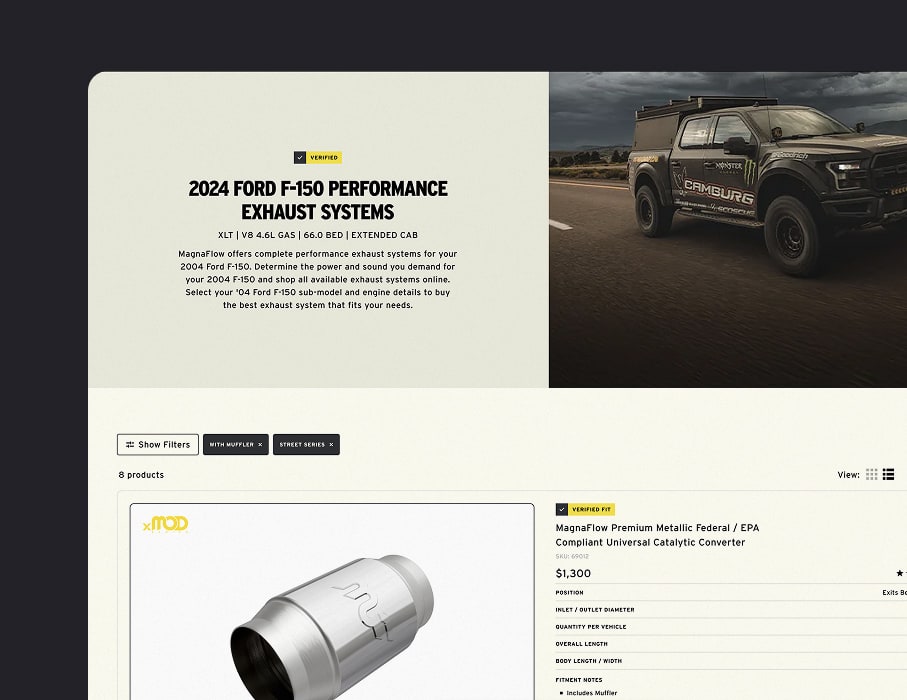
To address automotive-specific complexity, PIVOT implemented a robust Year-Make-Model fitment system with accurate compatibility filtering and streamlined product structures — reducing friction in finding compatible products and increasing customer confidence. A scalable data pipeline was built to handle ACES and PIES requirements through direct PDM integration, automating large-scale product data updates and improving catalog accuracy across all brands.
To unify the customer journey, PIVOT introduced a shared cart and checkout flow across brands, simplifying the purchasing process and removing friction at brand boundaries. The resulting architecture is designed as a long-term foundation — scalable for new acquisitions, continuously optimizable, and aligned with an evolving ecommerce ecosystem.
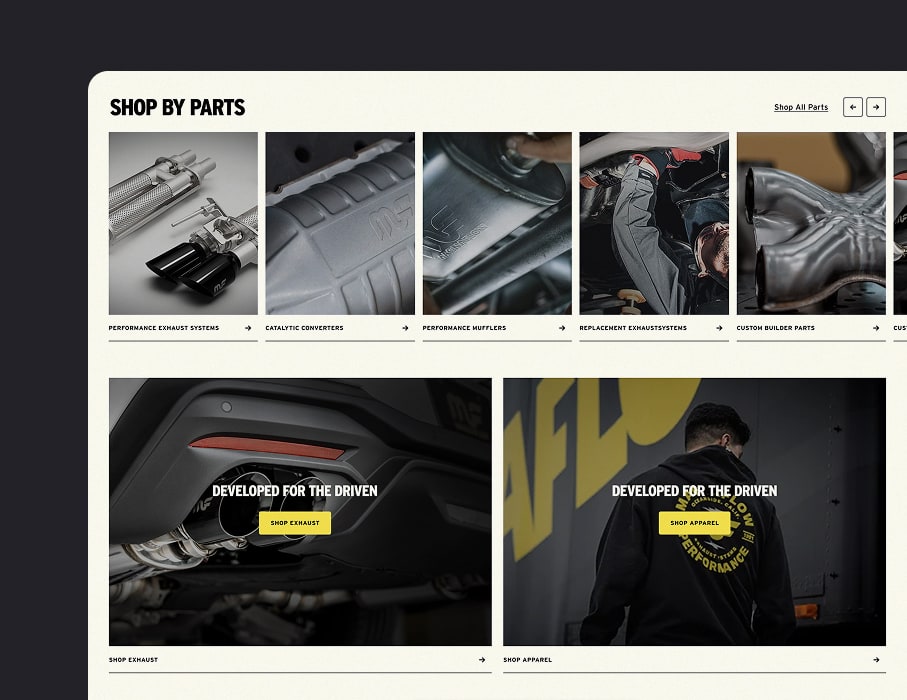

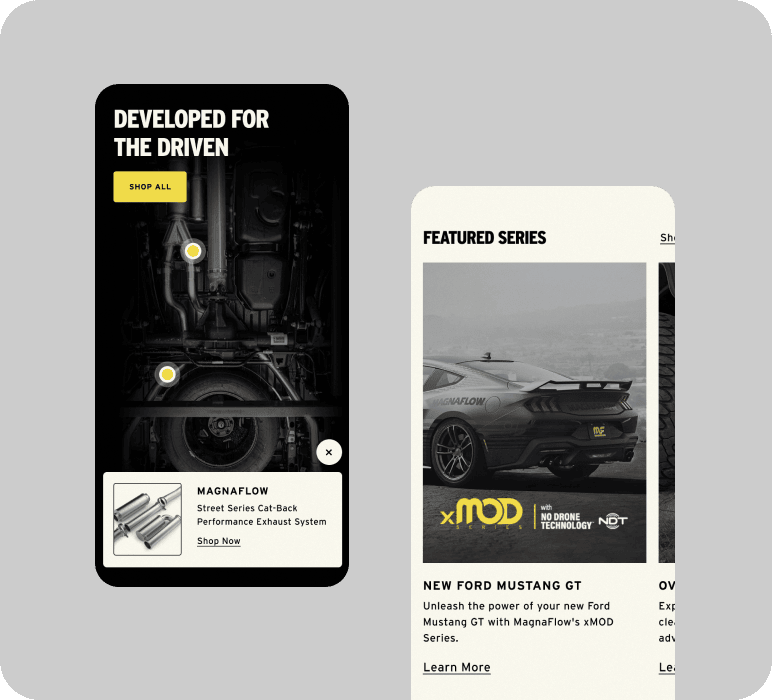
MagnaFlow's transformation demonstrates that sustainable scale requires unified architecture, structured data, and consistent experiences across brands. What was once a fragmented, multi-platform operation is now a cohesive ecosystem built for efficiency and continued expansion. PIVOT partners with multi-brand enterprises to build exactly that.
Visit Site